
Arrest Records in Tattnall County
A Tattnall County arrest can leave several records. The arresting officer writes the incident or arrest narrative. Tattnall County Jail records intake, listed charges, bond, custody, and release or transfer. Magistrate Court may hold warrant and first-appearance material. If a prosecutor files a case, the Superior or State Court clerk keeps the prosecution file. For a fingerprintable arrest, identity and charge data also move to the Georgia Crime Information Center, or GCIC. The prosecutor or court later reports the disposition. Those layers update on different schedules.
The arresting agency depends on place and event. Tattnall County Sheriff handles county incidents and jail custody. Glennville and Reidsville police retain their city reports. Georgia State Patrol handles its traffic-enforcement files, while the GBI or Georgia Department of Corrections may own records from major or prison-linked investigations. Collins has no verified official police portal, so identify the agency from a citation or event before requesting anything.
Tattnall Arrest Search Starts by Phone
No official open Tattnall County jail roster, booking log, sheriff app, or inmate sample was verified as of July 18, 2026. For a recent arrest, call the jail at 912-557-6778. Ask whether the person is now held, recently released, or transferred. A negative current-custody answer does not erase a past booking. Give the full name, approximate arrest date, and a booking number if known. Ask for the listed charge, bond type and amount, court, and release or transfer status.
The official Georgia Department of Corrections jail contact page confirms the local custody channel.
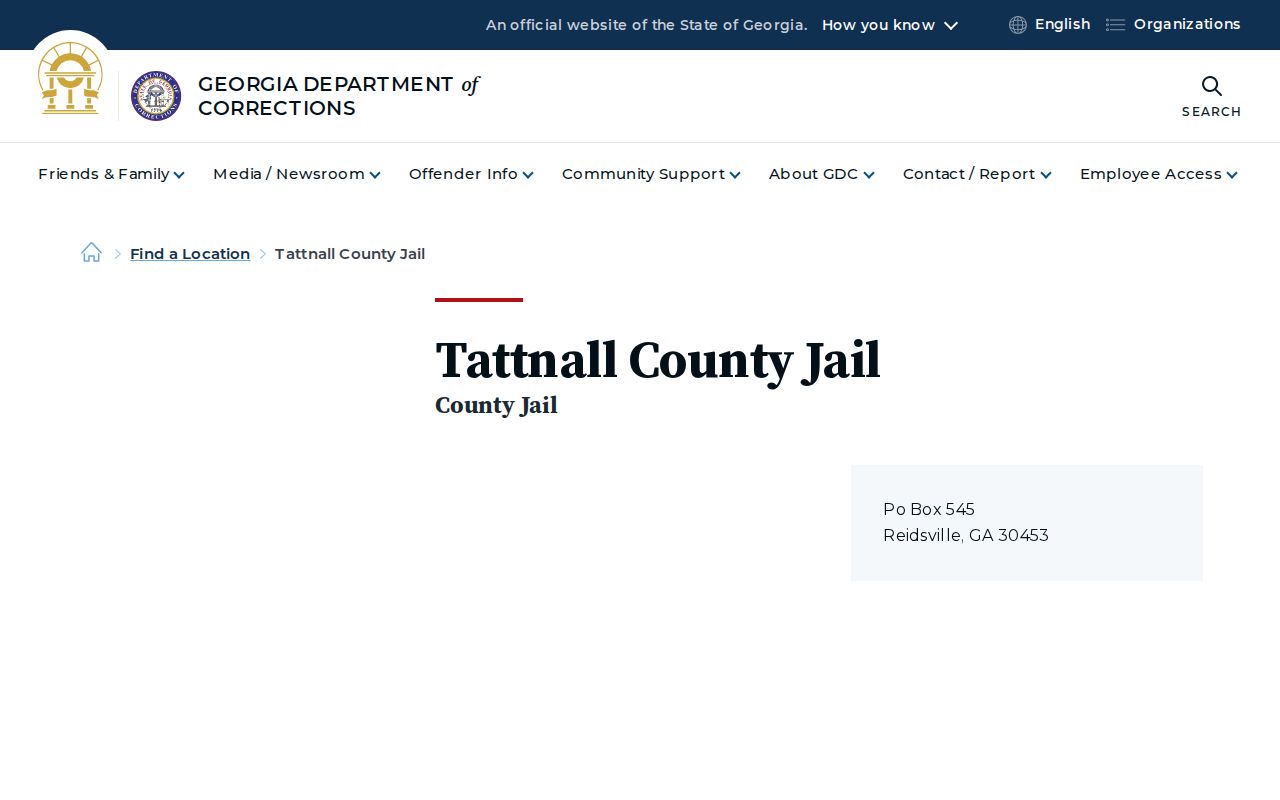
That listing supports a phone-and-counter workflow, not an online roster claim. It also keeps county jail custody distinct from Rogers State Prison and Smith State Prison, which are GDC facilities located in Tattnall County.
Tattnall County Arrest Lookups
Begin with the channel closest to the event. A jail answer can be fast, but it is only a custody snapshot. The report, booking, court case, and GCIC cycle must be checked separately when the full trail matters.
- Call Tattnall County Jail at 912-557-6778 for present or recent custody, booking number, intake charges, bond, release, and transfer information.
- Contact the arresting agency. Use sheriff 912-557-6777, Glennville Police 912-654-2103, Reidsville Police 912-557-4786, or the official channel of GSP, GBI, or GDC as the event requires.
- Call the Tattnall clerk at 912-557-6716 to ask whether a Superior or State Court case was filed. A case number and approximate year help.
- Use Georgia Felon Search only for a later, reported final Georgia felony result. Its name search is not a current arrest or county booking search.
- Send a focused Georgia Open Records Act request when a releasable report or booking copy is not supplied by phone. State the date range, place, name, record type, and preferred format.
Tattnall Sheriff and Jail
108 West Brazell Street
PO Box 545
Reidsville, GA 30453
Sheriff: 912-557-6777
Jail: 912-557-6778
Fax: 912-557-6728
Route Tattnall Arrest Requests
The agency that made the arrest usually owns the narrative. The jail owns intake and custody data. That split matters when a city arrest is booked at the county jail. Glennville provides a city open-record form. Reidsville accepts written requests by hand, mail, email, fax, or letter. For Collins, verify the agency rather than using the unrelated Collins, Mississippi website. A GSP traffic arrest may require a patrol report even though the jail holds the booking.
| Record owner | Likely record | Verified channel |
|---|---|---|
| Tattnall Sheriff | County incident, arrest, booking, warrant inquiry | 912-557-6777; jail 912-557-6778; fax 912-557-6728 |
| Glennville Police | City incident, crash, arrest | 134 S Veterans Blvd; 912-654-2103; city form |
| Reidsville Police | City incident or arrest | 130 S Main St; 912-557-4786; written city request |
| GBI Statesboro | Requested major-case investigation | 912-871-1121 and GBI records route |
The Georgia Attorney General's open-records instructions explain how to direct a request to the agency that holds the record.
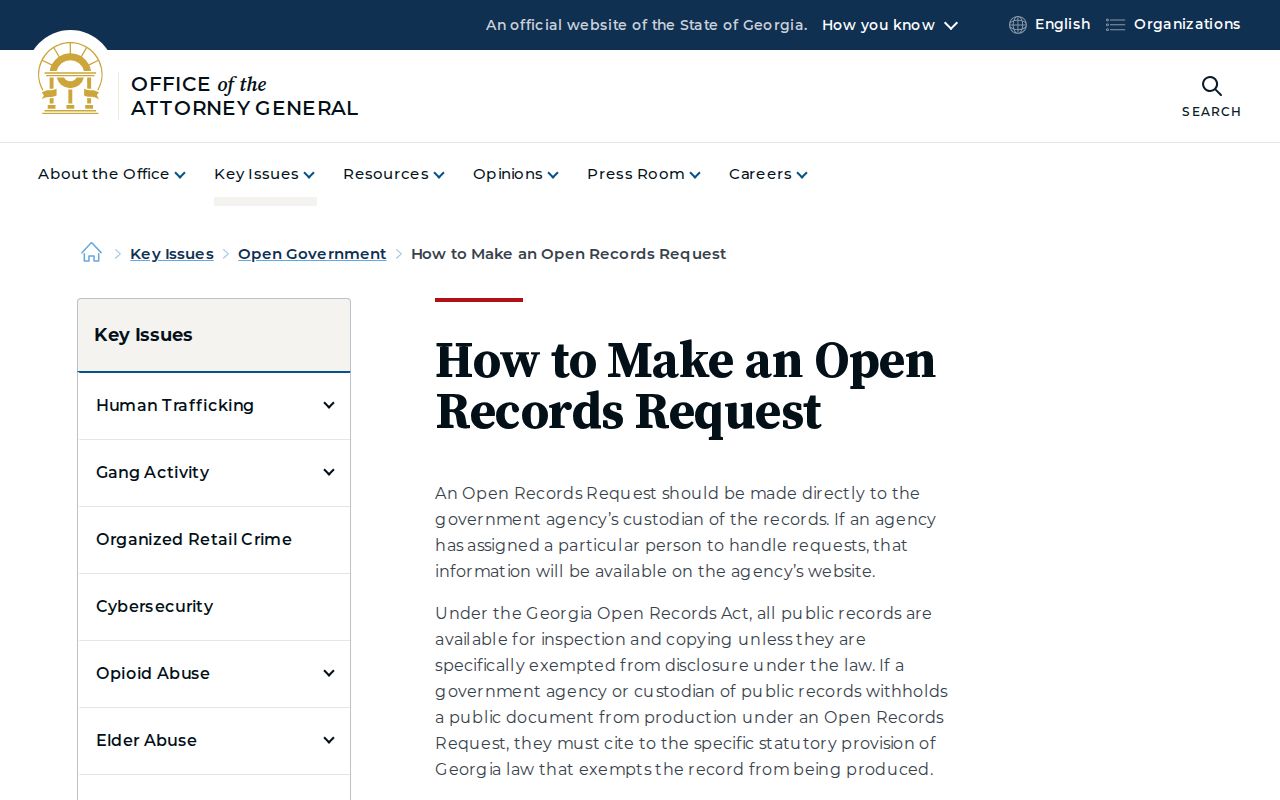
A precise request is more useful than asking an office to create a complete arrest-history compilation that does not exist.
Arrest Records: What They Contain
A requested arrest or booking record may carry the fields below. Tattnall County does not publish a sample that proves every field is public in every case. Ask for the fields needed and expect redaction of personal identifiers, medical or classification data, protected victim facts, juvenile information, and active investigative material when law requires it.
| Booking number | The jail's intake identifier, useful when calling about custody or requesting the booking sheet. |
|---|---|
| Date and agency | When and where the arrest occurred and which office created the arrest narrative. |
| Listed charges | Allegations recorded at intake. Prosecutors may amend, reduce, dismiss, or decline them. |
| Bond and court | The current bond label or amount and the court tied to first appearance or prosecution. |
| Custody status | Whether the person remains held, was released, or transferred to another agency. |
| Booking photograph | No verified Tattnall policy promises online display or release. Ask for releasable booking material. |
A photograph only shows that an image was associated with intake. It cannot establish guilt, the final charge, or the outcome of a court case.
Request Tattnall Arrest Records
Tattnall County Sheriff has no verified dedicated records portal, request PDF, email, fee schedule, or turnaround promise. Direct the request to the office that created or keeps the record. Include requester contact details, the agency or unit, event date and place, names, incident or booking number, exact record categories, date range, paper or electronic format, and a fee limit or request for an estimate. Keep proof that the request was sent.
The Atlantic Judicial Circuit DA explains that accessible records are normally produced within three business days or the office gives a description and timetable when production cannot occur then. The official DA request page shows that response framework.
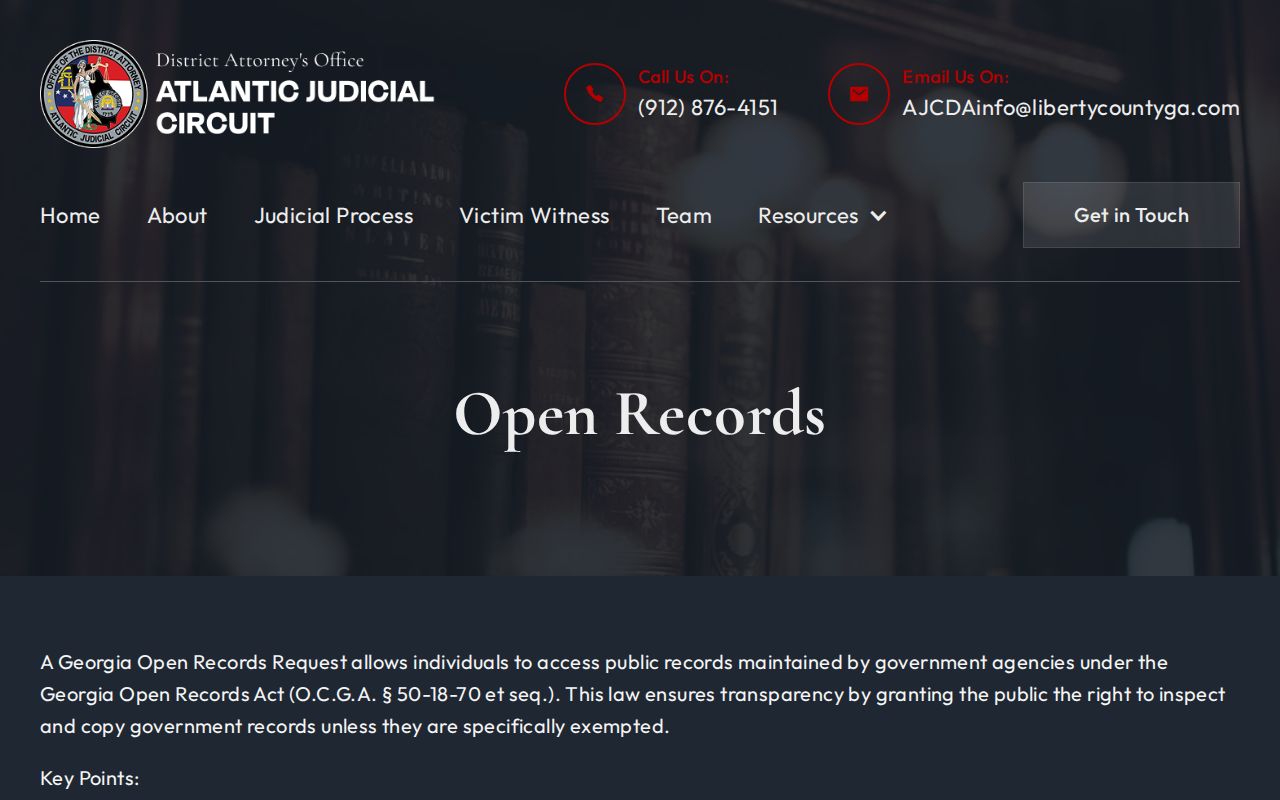
Search, retrieval, redaction, and copy costs may apply. A denial should cite the specific exemption, which may involve active investigations, juvenile records, victim data, security facts, or personal identifiers.
Recent Tattnall County Bookings
Timing controls the search. For a same-day event, the jail is the best verified first call because no court case may exist yet. After prosecutor intake, check the clerk. A final felony disposition may later reach GCIC and become eligible for Georgia Felon Search, but that public product omits misdemeanors, nonconviction arrests, juvenile matters, restricted records, federal matters, and out-of-state records. A no-record result is not proof that no arrest occurred.
When the jail says no, ask whether the person was released or transferred. State-sentenced custody belongs in GDC Find an Offender. Federal custody belongs in the Bureau of Prisons locator. Rogers and Smith are state prisons, not branches of Tattnall County Jail. Search dates should be recorded because each system changes as cases and custody move.
Recent Tattnall cases also show why agency routing matters. A Glennville police investigation can lead to a county jail booking and then Atlantic Judicial Circuit prosecution. A sheriff request for GBI help can produce a GBI public release while detailed investigative files remain active or exempt. GSP may own the traffic narrative for a highway arrest even when Tattnall County Jail holds the person. The public release, officer report, booking entry, and prosecution file describe different stages. None should be used to imply a result beyond the procedural status recorded by its source.
Tattnall Arrests Reach GCIC
For a fingerprintable arrest, the arresting agency sends fingerprints, identity facts, arrest date, charges, and a transaction cycle to GCIC. Fingerprints are the sound identity link. A name match alone cannot prove identity. The prosecutor or court must later report the final disposition, such as dismissal, nolle prosequi, acquittal, plea, or conviction. Missing or delayed reporting can leave a record incomplete.
The full Georgia criminal-history record and the public felony product are not the same. The public search shows a narrow set of reported final Georgia felony results. A reader tracing filed charges and the final outcome should also use the Tattnall County court case lookup.
If a person is correcting their own record, first obtain the full Georgia criminal history and mark the exact arrest cycle, charge, or missing disposition. Certified court or prosecutor records can support the correction. GCIC requires fingerprint comparison for an identity dispute. When the problem is an absent disposition, the court or prosecutor that owns the result must submit or correct it. Checking the local docket and GCIC product after the update is vital because one system can change before the other.
Arrest Records vs Conviction Records
An arrest is a seizure based on alleged grounds. A conviction follows a plea or adjudication in court. Booking charges often change before filing or disposition, so the two records should never be treated as substitutes.
| Arrest record | Conviction record |
|---|---|
| Created by the arresting agency and jail | Created through the court and reported to GCIC |
| Shows an arrest or booking occurred | Shows a court finding or plea and sentence |
| Held in agency, jail, and arrest-cycle systems | Held by the clerk and state repository |
| May end with release, no filing, dismissal, or acquittal | May lead to sentence, appeal, restriction, or sealing rules |
Note: A Tattnall County arrest is not proof of guilt, and the intake charge may not match the final court result.
Restricting Tattnall Arrest Records
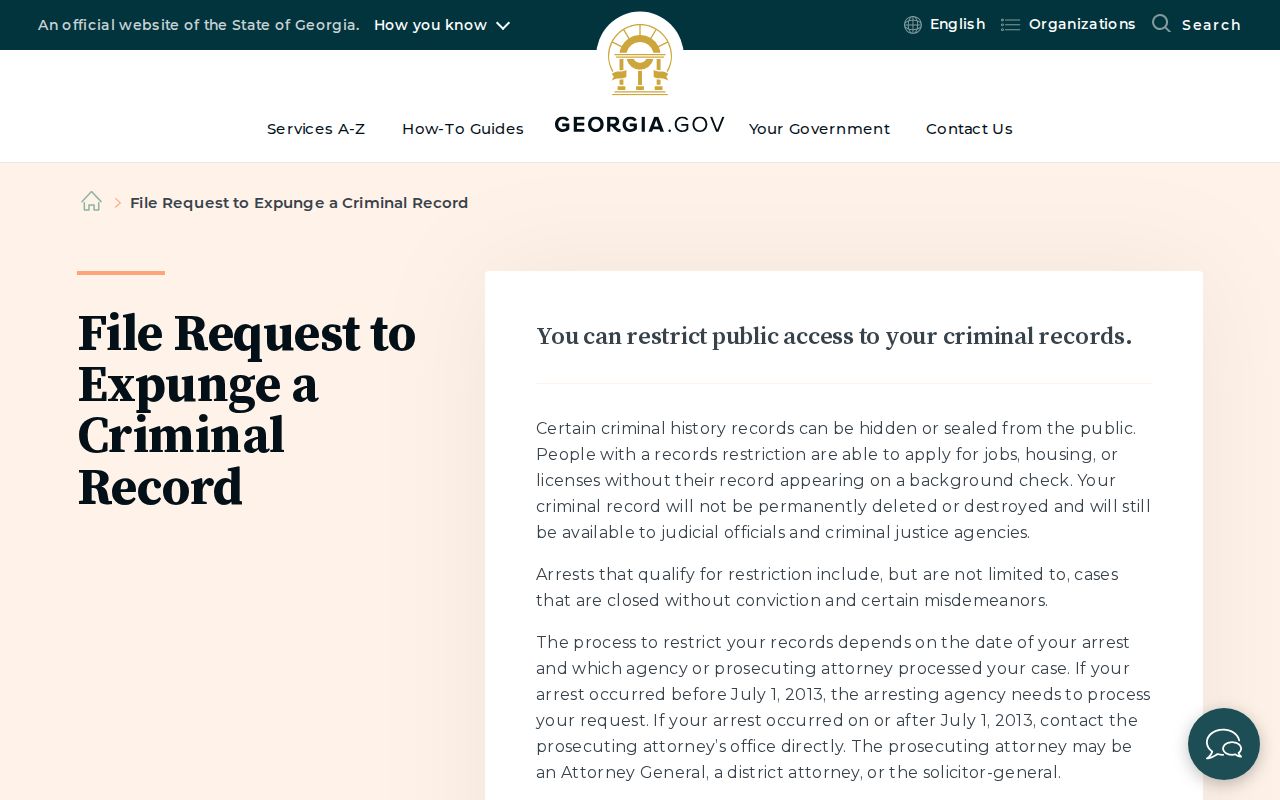
Georgia record restriction limits ordinary noncriminal-justice release. It does not destroy the record. Arrests before July 1, 2013 generally begin with the arresting agency and the official request form. For later arrests, the prosecutor handles the ordinary nonconviction route. A court record may need separate sealing under O.C.G.A. §35-3-37(m), since GCIC dissemination and a clerk docket are distinct systems.
The GBI restriction overview explains the state process.
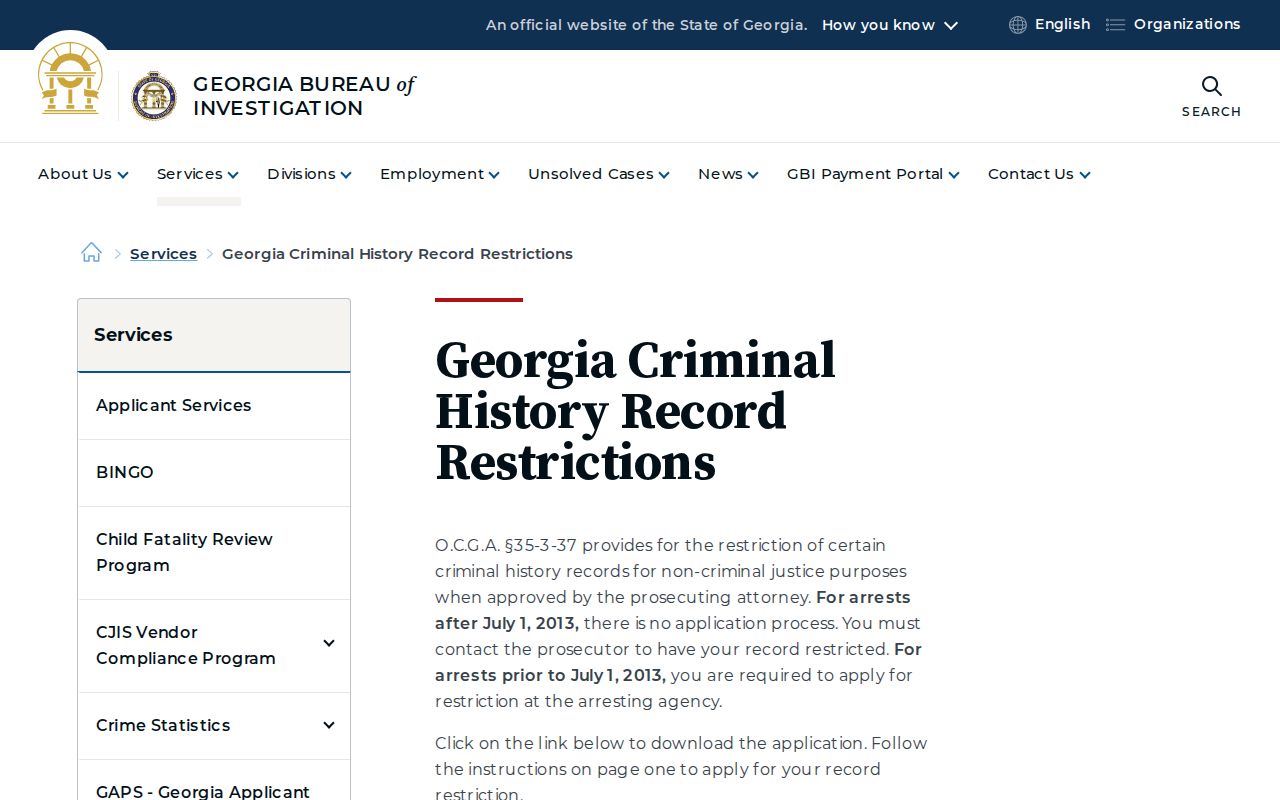
The state route depends on arrest date, disposition, prosecutor, and current eligibility. Check the exact arrest cycle rather than assuming a dismissal vanished from each system.
The Georgia record restriction guide provides a second official starting point.
After relief, inspect the GCIC result, local agency access, and Tattnall court view separately. Send the order to the responsible reporting office when a lawful public entry has not changed.