
Tattnall County Sex Offender Checks
The Georgia Bureau of Investigation manages the Georgia Sex Offender Registry / Violent Sexual Offender Registry under O.C.G.A. §42-1-12. Tattnall County Sheriff is the local registration office and validates information sent from people who must register in the county. The public state portal is the main search channel. It can be used by identity or place, while the sheriff is the sound source for local verification and a report of suspected noncompliance.
The GBI registry information page describes the official state system and its downloadable data.
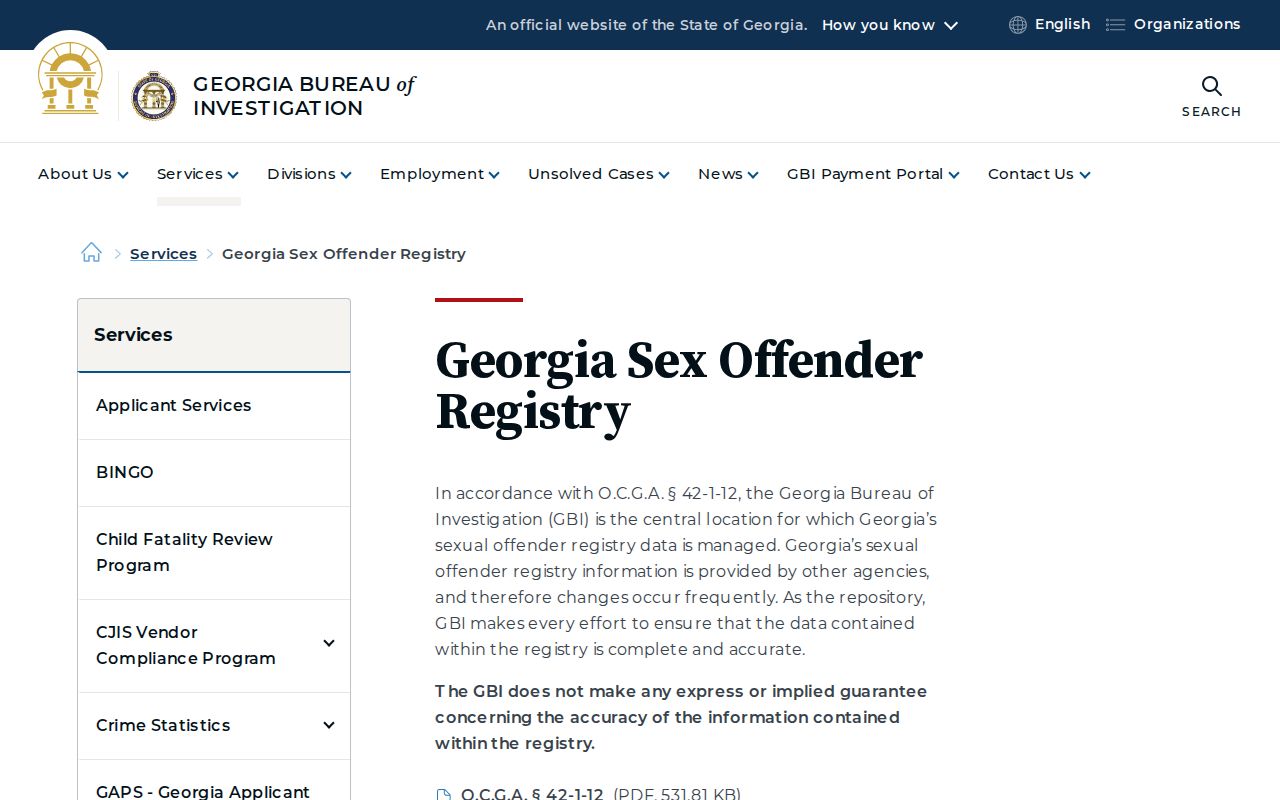
The GBI warns that source data changes often and carries no guarantee of full accuracy. Treat a search as a starting point, then verify a material concern with Tattnall County Sheriff at 912-557-6777.
Verify Tattnall Registry Results
A familiar name is not enough. Match the name and aliases with age, photograph, physical description, registered address, offense and jurisdiction, and any vehicle or status details that are shown. An address near a county boundary deserves a wider location search. A result that seems stale may reflect a move, a delayed source update, or a correction in progress.
Do not fill a missing field with rumor, social media, or a people-search product. If a person appears to have moved, changed vehicles, or failed to update required information, contact the sheriff. Do not confront the person. Record what the official profile showed and the date of the search so the local office can review the concern.
The county list also has a statutory public-access framework. Georgia law calls for availability through the sheriff and specified county, municipal, and Superior Court clerk locations. That does not mean each office runs a separate database or updates faster than the GBI portal. Start with the state search, then use the local sheriff to verify a Tattnall County address, status, or suspected reporting issue. This sequence preserves the source trail and avoids treating an old copy as the current registry.
Georgia Registry Searches
The official interface supports identity and location-oriented searching. Its live dropdown and radius choices can change, so use the labels displayed by the portal rather than relying on an old list of options. The process is free and does not require a third-party lookup.
- Open the official GBI registry and review its conditions and accuracy notice.
- Search by a known name or use the available place and address criteria for Tattnall County.
- Compare multiple identifiers in the result list before opening a possible profile.
- Read the full registration, offense, address, risk, and status details, then verify any consequential concern with the sheriff.
| Search approach | Input | Use |
|---|---|---|
| Identity search | Name and other displayed identity criteria | Find a possible person, then compare age and physical traits. |
| Place search | County, city, or ZIP criteria displayed by the portal | Review entries tied to a defined Tattnall area. |
| Address search | Street or geographic criteria displayed live | Check an area while accounting for nearby boundaries. |
| Profile review | Selected result | Read source details and the current displayed status. |
The official Georgia public registry search is the direct state interface.
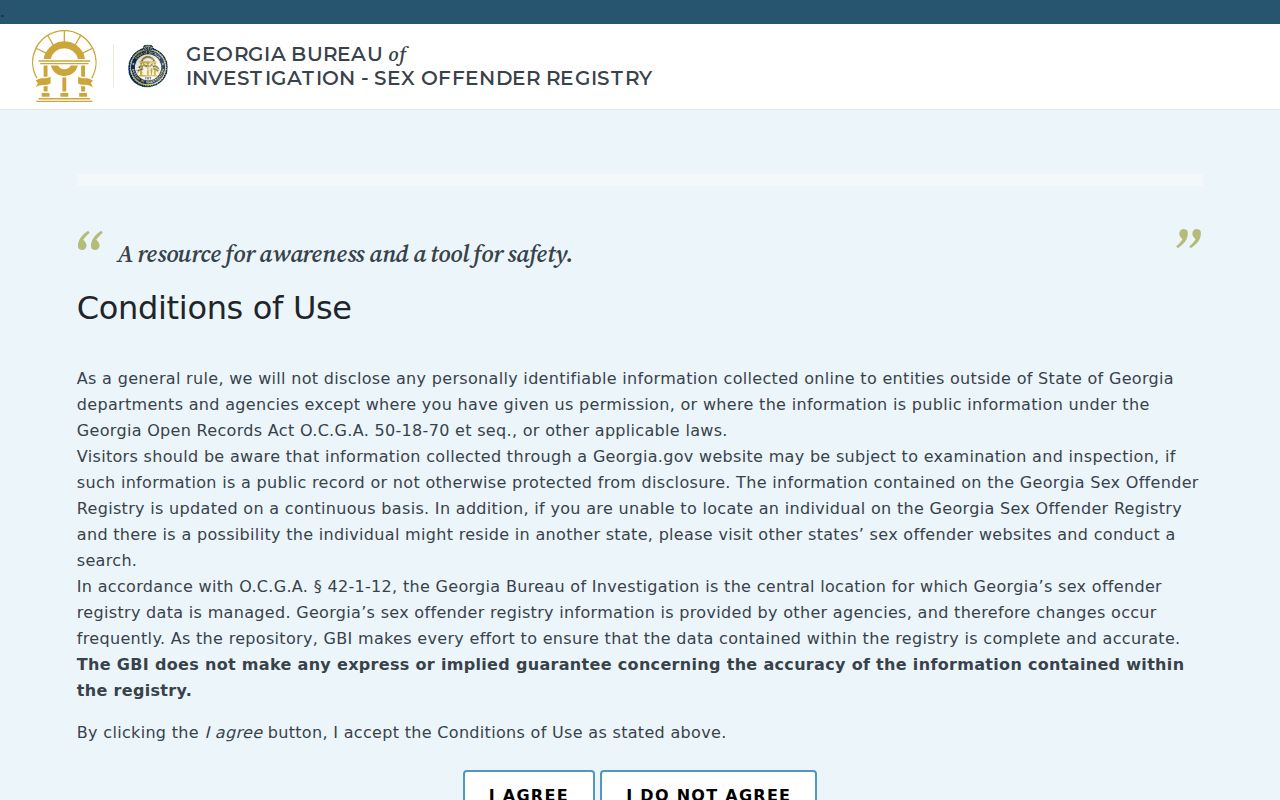
The interface should be searched fresh each time. Saved screenshots and old lists cannot show later corrections, moves, or changes in registration status.
Tattnall Registry Data Keeps Changing
Georgia's registry depends on information from sheriffs, courts, corrections agencies, and other source offices. A person must report specified events, and the sheriff then updates the submitted data. That process explains why a profile can change after a search. It also explains why the GBI does not warrant that all information is complete or current at every moment.
The GBI registry FAQ supplies official context for registration and verification questions.
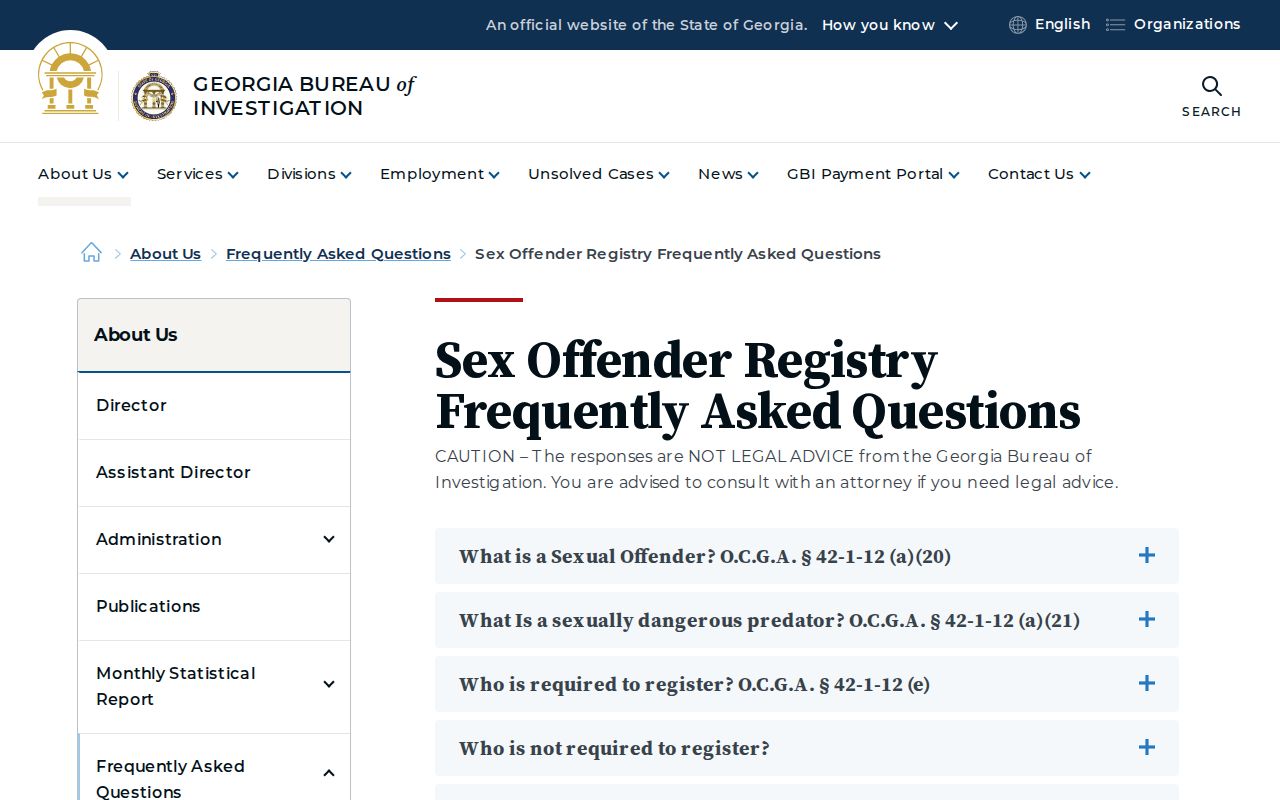
When an online result conflicts with a sheriff answer, note the date, office, and exact conflict. Ask whether the source update is pending and seek current official confirmation.
Registry Profiles: What They Show
Georgia law requires a broad source record, but not every protected source field is necessarily public. The county list must include core identity, conviction, location, photograph, and risk information. The public profile may also display aliases, vehicles, compliance facts, and other distinguishing information when supplied.
| Name and aliases | Identity names tied to the registration record, used with age and other facts to avoid a name-only match. |
|---|---|
| Photo and description | Photograph plus available age, race, sex, height, weight, hair, eyes, and distinguishing traits. |
| Registered location | Residential address or the reported sleeping location for a person without a fixed residence. |
| Offense details | Conviction crime, date, and jurisdiction rather than a new allegation created by the registry. |
| Risk classification | Level I, Level II, sexually dangerous predator, or the classification status supplied under Georgia law. |
| Other registration facts | Available vehicle, employment, education, supervision, compliance, and verification information. |
This inventory describes fields authorized or required by statute. No individual Tattnall County registrant is reproduced or singled out.
Extend Tattnall Offender Searches
County and state lines can make a narrow search incomplete. The U.S. Department of Justice National Sex Offender Public Website, or NSOPW, adds a cross-state layer. Use it when a move across Georgia or another state is plausible, or when a Tattnall address lies near a boundary. NSOPW supplements the Georgia source. It does not replace local verification.
The official NSOPW search connects participating jurisdiction registries.
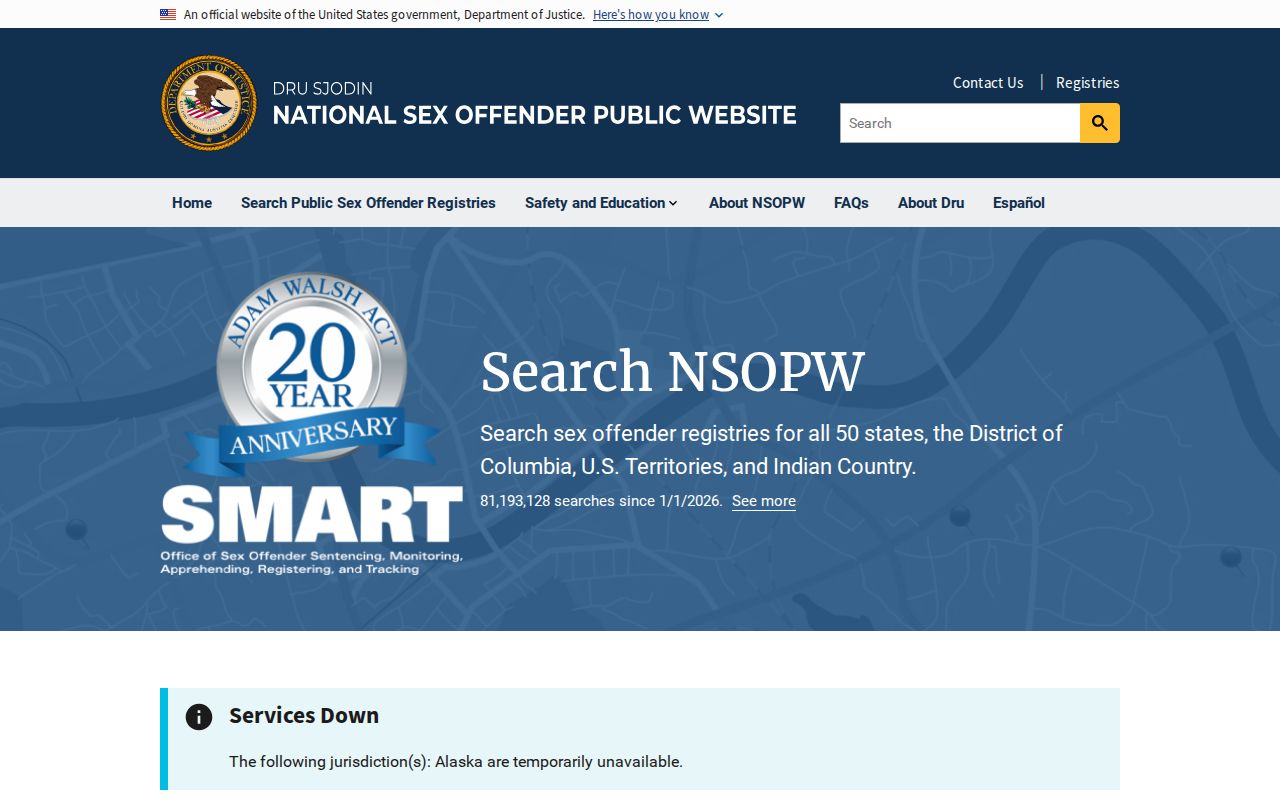
Compare the national result with the live Georgia profile and contact Tattnall County Sheriff when the local address or compliance status matters.
Registration Levels and Duties in Georgia
Georgia risk classifications are assessments by the Sexual Offender Registration Review Board, or SORRB. They are not federal-style tiers that automatically set registration at ten, twenty-five, or life. Registration is generally for life excluding incarceration unless a Superior Court grants release under O.C.G.A. §42-1-19. Risk level describes assessed danger or risk of reoffense, while the statute and court orders control registration duties.
| Georgia classification | Meaning | Duration and verification |
|---|---|---|
| Level I | SORRB assessment of low danger and low risk of sexual reoffense. | Generally lifetime registration unless released by court; annual birthday reporting. |
| Level II | Intermediate risk, neither Level I nor sexually dangerous predator. | Generally lifetime registration unless released by court; annual birthday reporting. |
| Sexually dangerous predator | Historical designation or SORRB finding of future dangerous-sexual-offense risk. | Generally lifetime unless court relief applies; birthday and six-month reporting. |
The official Georgia risk-classification law defines these categories.
A profile's level should not be treated as a prediction of certain conduct or as an automatic expiration date.
Tattnall Registration Time Rules
A person subject to Georgia registration generally reports in person to the county sheriff within 72 hours of release, placement, entry into the county, or a specified change. Address changes require notice to the old and new sheriff. Other required data changes must also be updated. Annual renewal occurs around the person's birthday with a new photograph and fingerprints. A sexually dangerous predator also reports at the six-month point.
- Initial or change report
- In-person sheriff reporting within the statutory 72-hour period for covered events.
- Annual verification
- Birthday-period renewal with current registration facts, photo, and fingerprints.
- Predator verification
- An added six-month report for a person classified as a sexually dangerous predator.
- Court release
- A Superior Court petition process under §42-1-19, not an automatic end date.
Some release paths depend on the conviction jurisdiction, current residence, service on prosecutors and sheriffs, elapsed time after all custody and supervision, and a qualifying classification. A denial generally triggers a two-year wait before another petition. Only a court can grant the statutory relief.
For some statutory routes, ten years must pass after completion of all prison, parole, supervision, and probation. Other qualifying categories and exclusions can control the petition. A Level I assessment may matter, but it does not itself release anyone from registration. The Superior Court reviews the legal requirements and serves the involved prosecutor and sheriff. Readers should therefore distinguish three dates: the conviction or release date, the annual verification date shown by the registry, and the date a court grants any release order.
Tattnall Location Rules Need Care
O.C.G.A. §42-1-15 contains restrictions tied to specified child-focused places. Application can depend on the offense date, legal history, and constitutional rulings. A map radius alone cannot resolve those issues. Use the current statute, the registration office, and legal advice for a real compliance question rather than stating that one fixed distance governs every person.
The same care applies to a negative area search. It shows what the selected official criteria returned at that time. It cannot prove that no registrant lives nearby, because addresses and source data can change and search boundaries may omit adjacent areas.
Using Registry Information Lawfully
Use Tattnall County registry records for awareness, measured safety planning, and official verification. Do not publish extra personal claims, contact a household, or turn a profile into a public accusation beyond the conviction and registration facts the source states. Report a suspected failure to register to Tattnall County Sheriff at 912-557-6777.
Misuse is a crime: O.C.G.A. §42-1-12 makes it a misdemeanor to use registry information to harass or intimidate a registrant or the registrant's family.
The registry statute also describes publication and community-notification duties. Local access does not grant a right to threaten, retaliate, or deny a lawful service. Keep the response with the sheriff and other proper authorities.